Tuesday, December 22, 2009

The Botany of Desire

Based on Michael Pollan's book by the same name, The Botany of Desire explores a perspective on cultivated plants that has often gone neglected: plants use us to obtain their own desires. We may think ourselves the masters but we are no more the master of roses than the insects that pollinate them.


This PBS broadcast describes four species that have abused our fondness of them: apples, tulips, cannabis and potatoes.

Pollan spoke true when he said that we talk metaphorically when we say that plants have desires. The reason we continue to communicate this way is due to a lack of vocabulary to describe how we relate to other organisms. We have for so long thought ourselves the only creatures that matter on earth.

See more about the video and Pollan's book here:


Cosmos: an orderly harmonious systematic universe.
"Some part of our being knows [the cosmos] is where we came from. We long to return. And we can, because the cosmos is also within us; we are made of star-stuff. We are a way for the cosmos to know itself."
-Carl Sagan
"We wish to pursue the truth no matter were it leads, but to find the truth we need imagination and skepticism both. We will not be afraid to speculate, but we will be careful to distinguish speculation from fact."
-Carl Sagan

This statement is a monument to the robustness and elegance of Sagan's methods and work.

Saturday, December 19, 2009

Joker One

Before Charlie left on deployment, he gave me a book written by Donovan Campbell, a lieutenant in the Marine Corps, about his experiences during time spent as a combat platoon leader in Ramadi during more than half of 2004. I have difficulty describing the content of the book as I reflect on it. Emotionally provocative, educational, disturbing, and indispensable might be helpful descriptors. I also found that Lieutenant Campbell's perspective of the situation in Ramadi deviated interestingly from what was reported in the media back in the states. Many other lessons I learned in proxy from the experiences of Golf Company, First Platoon. I recommend Joker One, by Donovan Campbell to anyone sixteen years of age or older, especially to those trying to understand the war.

Magic Street

I recently finished a book called Magic Street, by Orson Scott Card. It was the first work of fiction I had read in a while, and it showed again that Card is a master of story, character, and originality. Orchestrating a journey through his own twisted version of Alice's Wonderland or the kingdom of Narnia, Card plays his readers like a puppeteer. Can you guess his next move? Remember, writing is equal amounts of psychology and hard work; reading is mostly about psychology.

Friday, December 18, 2009

"Fixed fortifications are a monument to the stupidity of man."
-George S. Patton
"Don't fight a battle if you don't gain anything by winning."
-George S. Patton
"When I want my men to remember something important, to really make it stick, I give it to them double dirty. It may not sound nice to some bunch of little old ladies at an afternoon tea party, but it helps my soldiers to remember. You can't run an army without profanity; and it has to be eloquent profanity. An army without profanity couldn't fight its way out of a piss-soaked paper bag."
-George S. Patton
"How happy is the blameless vestal's lot!
The world forgetting, by the world forgot.
Eternal sunshine of the spotless mind!
Each pray'r accepted, and each wish resign'd;"
-Alexander Pope

The word vestal has an interesting history. Look up Vesta and vestal in your favorite dictionary.
"Painting is not done to decorate apartments; it is an instrument of war against brutality and darkness."
-Pablo Picasso

Thursday, November 26, 2009

"It is for us the living, rather, to be dedicated here to the unfinished work...."
-Abraham Lincoln

Monday, November 23, 2009

"The art of war is simple; everything is a matter of execution."
-Napoleon Bonaparte

Saturday, November 21, 2009

I'm on a roll tonight. Here's a good one:

"Ridicule is the only weapon that can be used against unintelligible propositions. Ideas must be distinct before reason can act upon them."
-Thomas Jefferson

I don't have a reliable reference for this one, so I hope I'm not spreading lies. But next time I poke fun, you'll know what I'm really saying.

Smoking Lettuce

This is one of my favorite Auto Tune rhapsodies.

Friday, November 20, 2009

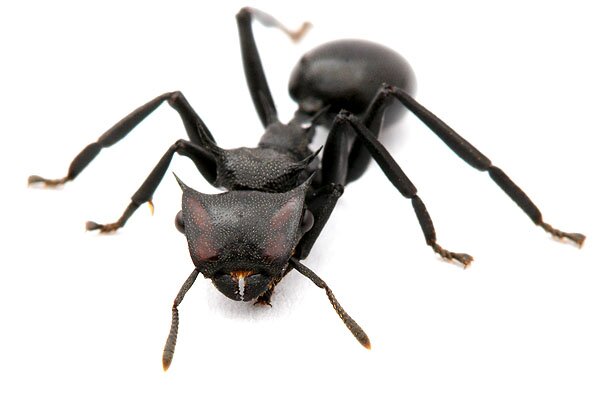
Animal of the Week: Eciton burchellii

New World army ants I found to be highly aggressive and would chase after me when I began to pluck individuals from their column and deposit them in my ethanol vial. The major workers have large, sickle-shaped mandibles that easily pierce flesh. They sting too. Don't mess with these girls unless you know what you are doing. I believe I got five different species of Eciton on my last trip to Tambopata, but E. burchelli was most abundant.


I also discovered that E. spp. workers exude a highly volatile, pungent substances that causes irritation. I first noticed this in the lab while examining preserved specimens under a microscope. My eyes began to sting and tear up. The next time I collected them I paid close attention and the live ants also emit this unpleasant odor. So, not only do they bite, sting and pierce your flesh, but then they rub nasty chemicals in your open wounds. I love ants.

Thursday, November 5, 2009

"Is life so dear, or peace so sweet, as to be purchased at the price of chains and slavery? Forbid it, Almighty God! I know not what course others may take; but as for me, give me liberty or give me death!"
-Patrick Henry

Monday, November 2, 2009

"Knowing why is more important than learning what."
-James Watson

Saturday, October 24, 2009

High Desert Scenario Paintball

Team Hellfish graciously filmed, edited, and published this video from footage taken at the last game I attended with my friend Noel.

Friday, October 23, 2009

Just Say No...

...to disposable cups.


Photo thanks to Intel corporate propaganda.

That goes for bottled water too. I have been trying to teach my family about conserving natural resources and coexisting with all God's creatures, great and small.

Wednesday, October 21, 2009

Terra Australis Incognita

The following excerpt comes from the journal of Lieutenant James Cook and reflects on the native Australian people:

"In reality they are far more happier than we Europeans, being wholy unacquainted not only with the Superfluous, but with the necessary Conveniences so much sought after in Europe; they are happy in not knowing the use of them. They live in Tranquility which is not disturbed by the Inequality of Condition. The Earth and Sea of their own accord furnishes them with all things necessary for Life."

Also of note, Cook often admitted his failure to learn the Australian people's customs or to "form connections with them." Still, his observations deserve some reflection.

Tuesday, October 13, 2009

Two Men, One Phenomenal Idea

The following excerpt is from The Ant and the Peacock by Helena Cronin. The book mostly deals with two special cases of biological evolution, altruism and sexual selection, that at first were problematic. Here is the text:

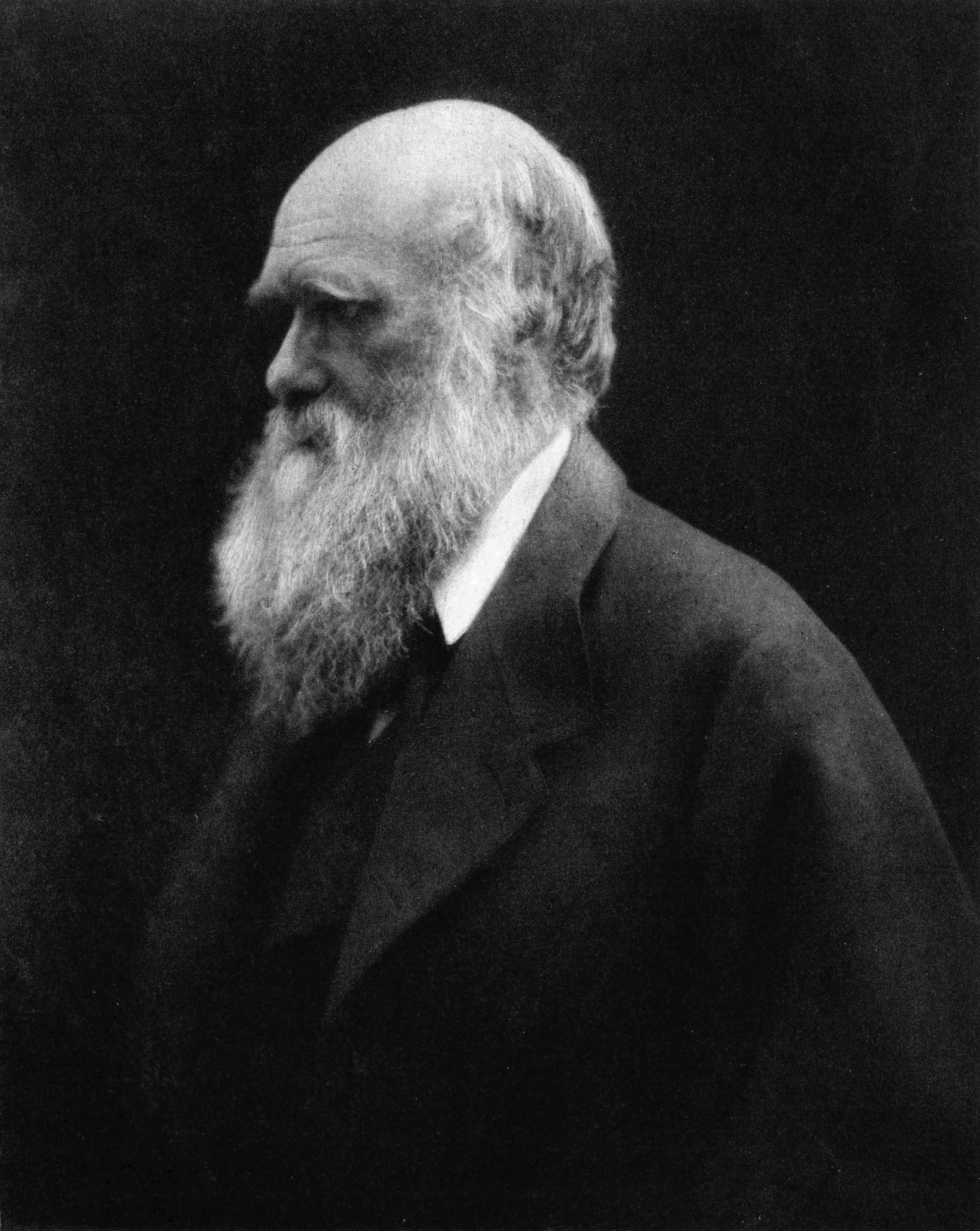
"Imagine a world without Darwin. Imagine a world in which Charles Darwin and Alfred Russel Wallace had not transformed our understanding of living things. What, that is now comprehessible to us, would become baffling and puzzling? What would we see as in urgent need of explanation?

"The answer is: practically everything about living things--about all of life on earth and for the whole of its history."


A brief explanation is in order for those not familiar with Wallace. After his famous voyage across the globe on The Beagle and two decades of gathering additional data and developing hypotheses, Darwin came to some conclusions concerning "the origin of species by means of natural selection," but had decided not to make public his ideas just yet. As I recall, about this time he received a letter from an associate, the younger naturalist Alfred Russell Wallace. (He has quite an interesting story of his own that you can read about elsewhere.) The letter detailed Wallace's hypothesis that provided an explanation for the variety and similarities we see among species. Darwin quickly realized that he and Wallace had independently pieced the same puzzle and decided it was time to make his ideas public. Being a gentleman and not wanting to rob Wallace of the credit due him (which would have been very easy), Darwin arranged for his and Wallace's ideas to be presented together at a meeting of the Linnean Society.

The next year, Darwin published his book The Origin of Species (short title). We tend to mention only the work of Charles Darwin with respect to biological evolution for, I think, two reasons: first, he had accumulated more data and spent more years studying the subject than Wallace; and second, Darwin was more affluent and had a broader reputation.

If you want to learn more, here is a link with useful information:

Also check out the Charles Darwin Wikipedia article that was nominated and elected for featured article status:

The article on Wallace is very good and also was elected as a featured article:

Monday, October 12, 2009

A Little Gandhi Goes a Long Way

"My idea of society is that while we are born equal, meaning that we have a right to equal opportunity, all have not the same capacity."
-Mahatma Gandhi

As much as Mahatma made a point of getting back to his roots, his ideas differed radically
from traditional Hindu values.

Sunday, October 4, 2009

Political Philosophy

I found this lecture interesting; it describes a dilemma I have been trying to confront for a long time. Pay close attention to what this professor says between minutes 15:00 and 23:00 of the lecture.


After presenting a hypothetical situation that involves a moral decision and going through several variations of the story, the students find out that the answer or solution is not as clear as they first thought. The ignorant think moral decisions easy, while the more you understand the situation, the more disabled you become. An understanding of philosophy has made me a worse citizen. I hope to see the uphill side of my valley of defeatism, I just don't think I'm there yet. I often feel like Socrates.

I had some other thoughts while watching this video. Here are some:

I also wonder why are we so preoccupied with preserving human life or maximizing human happiness? Honestly, I don't care much about the result of the train wreck, whether one worker dies or five workers die. Either way an accident occurs. Yes, the case is tragic, but people do die. One of my favorite cynical philosophers, Robert Heinlein, said in effect that we reach adulthood when we realize we will one day die and accept our own death. Blame it on thermodynamics. Every living organism has to consume energy to stay alive, the environment providing fuel to our otherwise closed system and allowing us to escape the second law, but eventually we are overtaken by entropy and become dust.

The study of biology is beautiful because most of the life on this planet is void of morals, making life wonderfully uncomplicated. Richard Dawkins knew this when he wrote The Selfish Gene. To apply human morals to non-human biological systems would cast a very malicious light on biology.

Sociobiology trumps all philosophers. I often wonder how Edward Wilson would respond to lectures like this one. I suspect he keeps much of his thoughts to himself, as they would seem taboo to someone who understands little of biology.

I'm sorry if this post came across a little strong-flavored and distasteful, but these issues have been on my mind for a while. I'm sure most of my readers would prefer another animal-of-the-week write-up.

Saturday, September 26, 2009

The Battle of Hastings: incapable allies and lack of martial discipline undo King Harold


In 1066 following the death of King Edward, Harold began and ended his reign as King of England. Several months after the coronation ceremony, both the Norse vikings and King William of Normandy with his army invaded the coasts of England. Harold had originally placed his army on the southern coast to defend against the Norman invassion, then marched North when the vikings invaded first and prooved too much for his northern allies. The vikings were soon crushed, and none too soon as William and his army landed at Susseux. After a swift march South, Harold met with William outside of Hastings and battle ensued.


Despite marching all over the countryside and back and being forced to take a defensive possition, Harold had the advantage as he held the high ground with a narrow avenue of approach. William needed a swift victory or else Harold would continue to muster his army. The Norman archers, heavy infantry and cavalry attacked the hill and could not break the defenders' shield wall for much of the day. To make the story brief, the line only failed after small groups of Harold's army, most of them not professional soldiers, continually broke rank to persue fleeing enemies and then were in turn isolated and destroyed. Harold himself was eventually killed.


Thus bagan the Norman rule of England.

Tuesday, September 22, 2009

Animal of the Week: Dendrobates leucomelas


Dendrobates leucomelas, or the bumble bee dart frog, comes in orange or yellow with highly variable patterns of black spots and bands. This frog originates in northern South America, mostly Venezuela. They are non-toxic in captivity, due to a change in diet, and make great pets as long as you have a steady source of food for them. They will eat any small insects and I have found they prefer Drosophila melanogaster or similar sized morsels. Also of note to those who might want to keep them, they do require calcium supplements or they will suffer neurological malfunctions, possibly leading to death. I would suggest not feeding them ants of the subfamily Formicinae, as these ants are the suspected source of precursor molecules used to manufacture toxins.

Friday, September 18, 2009

Paintball

I found a great video of the game I took the guys to back in May:


This one is from the field we will visit in October:


That's about as extreme a sport can get.

Thursday, September 17, 2009

Daily Feeding Ritual

Here we see Tuco and Donatello feasting on vitamin-dusted Drosophila hydei. Tuco actually prefers the smaller D. melanogaster, but he will eat either.

We keep the following animals at our house:

1 Hyla regilla

1 Dendrobates leucomelas

2 Mantidae

1 Tegenaria sp.

~1000 Drosophila melanogaster

~50 Drosophila hydei

2 half-pint Homo sapiens

Sunday, September 13, 2009

Animal of the Week: Hyla regilla


Hyla regilla, or the Pacific Tree Frog, is common along the pacific coast from northern California to Washington, but also ranges South to Baja California, East to Idaho and Montana, and North to Canada.

In my youth I kept one as a pet. His name was Fred. Just today Jenny found one at church, so we added him to our vivarium at home. Thomy named him Donatello.

Multiple color morphs exist, mostly brown to green, but also sparkly golden and a rare blue form.

Thomy's First Day at Preschool

Thomy now goes to Mi Escuelita, a new bilingual preschool here in Newberg. Here are some pictures from his first day.


Horsees

Thanks Nana and Papa for taking us horse-riding.


Tuesday, September 8, 2009

Animal of the Week: Morphidae


One of my most memorable moments in insect collecting was riding down the Rio Tambopata in a small motor-driven craft on a rainy day swinging nets at these blue beauties. They were an uncommon sight under the canopy and I did not expect to see them that day since most insects take cover during rainstorms, but for some reason we found them flying up and down the bank of the river (actually it was a tributary of Tambopata called Aguas Negras). Gavin and I caught three or four in a short time. They really are beautiful.

Morphidae is the family containing these large, metallic blue butterflies, Morpho being the genus.

Sunday, September 6, 2009

Nana's Favorite Jeff Trick

Boys Doing Homework

I wanted to post a picture of Thomy and Jeff doing their homework. Here it is:


Thomy also wanted to write something on my blog, so here he goes:

ihpqnmtoyyaxmb 1234567890

Jeff always has to copy his brother:

nnnnnnnnnnnnnnnnnnnnnnnnnnnnnnnnnnnnnnnnnnnnnnnnnnnnnnnnnnnnnnnnnnnnnnnnnnnnnnnnnnnnnnnnnnnnnnnnnnnnnnnnnnnnnnnnnnnnnnnnnnnnnnnnnnnnnnnnnnnnnnnnnnnnnnnnnnnnnnnnnnnnnn

Ta-ta for now.

Long-lost Friend

I broke down and created my very own Facebook profile, but I did it with a specific intention: to hunt down my old friend Ben Anderson. I still had some difficulty but achieved my goal in the end. I hope he doesn't mind if I link to his Facebook photo here.


Ben is on the left in the blue shirt. He and I met when his family moved in next door to us. I must have been about three years old, and I remember showing off my Hotwheel tricycle when he and his brother first came over. Ben and I spent the next fourteen years or so as best friends until he moved to Arkansas and we lost contact. Facebook has paid off and I will now promise to criticize it less than before. It was nice to talk to you again, Ben.

Tuesday, September 1, 2009

Swimming and Dinner

Jenny and I took the kids to family swim time at the public pool yesterday. We all had fun, but Jeff was disappointed when we wouldn't let him go down the water slide.


We also went to the park where Jeff learned a new trick and insisted on having no help.


Later that evening we had the Masjuan family over for dinner. A few other people ended up on the invitee list as well.


We ate arros verde, pasta primavera and crepes for desert.

Hood-to-coast 2009


I participated in the Hood-to-coast relay race this year for the first time. After working all night previous to the race and sleeping only four hours the night before that, I was very tired. For me, the race was more an exercise in will power to stay awake. But now I have a couple of photographs and a medal to prove I did it.

Monday, August 24, 2009

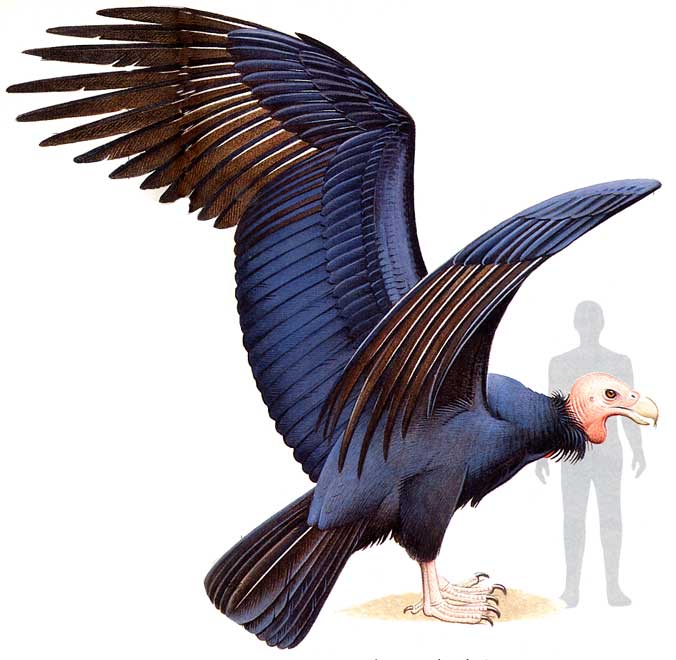
Animal of the Week: Argentavis magnificens

In the fossil record we have found giant, extinct versions of just about every class of animal living today. If you thought elephants were big, you should see some of their extinct relatives. Think Mumakil of The Lord of the Rings.


Argentavis magnificens was a giant relative of modern vultures from the late Miocene that had an estimated wingspan of about 7.3 m. As its name suggests, it lived in the area we now call Argentina where it likely scavenged on the large mammals prevalent at the time.

Large animals are usually the most susceptible to extinction during times of change, which is why we don't see many of them today.

Sunday, August 23, 2009

Got Music?

Ever wonder what drugs, sex and rock-and-roll have in common biologically? The answer is simple: dopamine. They all reward your brain with the same hormone. So, if you can't get any of the other two, try some music. Those hippies really did have fun.

PBS produced a special called The Music Instinct. I highly recommend it for everyone. You can watch it in segments by clicking on the video tab at this link:


Alternatively, if you have Netflix you can get it instantly (or nearly so) on your PC or Xbox360. The show runs close to two hours in length and covers a broad spectrum of topics within musicology, music therapy, physics and neuromusicology. They even include a brief interview with Brian Greene, a well-known string theorist.

I learned a new favorite word. Amusia: literally, the abnormal absence of music, used to denote people that have no sense of music. I think I know a few of those a church. Etymologically this reminds me of an earlier post. The thespians were strong believers in the Muses. (Both English words music and Muse are derived from the same root, the Greek being mousike or Mousa, respectively.) These mythical goddesses presided over song, poetry, the arts and sciences, all of my favorite topics excluding poetry.

Friday, August 21, 2009

Green Music

A new study estimates the carbon consumptions associated with purchasing music using a variety of methods. See this link for the New York Times summary of the study:

http://greeninc.blogs.nytimes.com/2009/08/17/the-carbon-case-for-downloading-music/

The article has a link to the full study for those inclined readers.

I should note that the study was funded by private corporations and was not peer-reviewed, but it appears reliable enough.

Please understand that I do not support illegal downloading of music. My preferred method is Amazon.com MP3 downloads. You can get a lot of good albums for under $10--sometimes as low as $3 or $4 for new or popular releases.

I wish movies were more available for download using legal methods. Amazon.com offers movie downloads, but their files are only playable using the software they provide. Apple also sells movies for download, but compatibility is again an issue.

As an afterthought, it seems sensible that streaming music from the Internet would consume more carbon than a one-time download, because if you wanted to listen to a song more than once (and who doesn't) then each song would consume as much energy as a one-time download for every time it was played. See the cost associated with downloading music in the study.

Remember: green is happy.

Wednesday, August 19, 2009

Thermopylae

Note: the content of this post has been modified from its original version for clarity and accuracy.


I have a book on my current reading list called Where History was Made. It is heavily biased, favoring Western civilization, and so naturally starts with the Greeks. In recounting the battle of Thermopylae, the book only tells about one-third of the tale but adds some juicy bits that I did not know previously. Here is a short lesson on what actually happened--as far as we can sensibly deduce--for all of you misinformed and Hollywood-stricken readers. If you hate lectures, avert your eyes now.

Persia was the largest empire in history until its time. After Darius failed one attempt to subdue Greece, and more directly the Athens, during the battle of Marathon (a story for another time), Xerxes, the next Persian emperor, thought he would teach the Athens a lesson for humiliating his father. Thus, they came to Greece.


The Greeks lived divided into city-states and fought amongst themselves as much as with outsiders. The Spartans, warriors of Lacedaemon, possessed a particularly brutal and militant culture, very much the black sheep of the Greeks, but were loyal to the death. They formed part of a small alliance that opposed Xerxes. The non-alliance cities either sold their allegance to Peria or stood on the sideline.


To stop the Persians, a small force of infantry, including several hundred of Sparta's elite troops, and a fleet of ships were sent to stop up the way. Thermopylae was to be the battlefield, chosen to take away the Persians' advantages of superior numbers and cavalry. (Thermopylae was in this way very similar to Marathon.) The battle lasted a few days while the Greeks used their long spears to slay and repel many of their enemies. Meanwhile, the small Greek navy ambushed the impressive Persian fleet, and with some luck and bad weather the Persian forces never landed on the beach to surround the Greek infantry.


The battle came to a head after a local man sold his secretes to Xerxes and lead Persian troops on a route to bypass the narrow beach. The Greeks had warning that their enemies would soon surround them and evacuated most of their forces, leaving only Leonidas, King of Sparta, with 300 Spartans and 700 Thespians. You see, before leaving for battle, Leonidas spoke with a prophetess who told him that if he went to battle he would not come back but would be remembered as a legend for all of time. He chose to stay and fight to the death. In doing so, he bought the Greeks a few more hours to rally themselves and, after the sac of Athens, another decisive naval victory, and several other battles, the Greeks did repel the invaders. The battle itself was an important event; the death of the King of Sparta and his men was mostly pointless. They did however set an example of dedication and sacrifice for the rest of Greece.


So why do we care? Well, eventually the Greeks united themselves and popularized democracy as practiced in Athens. Hurray for democracy. The end.


Not quite, actually. I learned two new tid-bits. One of the monuments at Thermopylae pays tribute to the brave Thespians: a statue of Eros, the patron god of Thespiae. Guess what English word we get from Eros? I'll give you a hint: my parents would be embarrassed if I said it in public. I also learned that the width of the passage at Thermopylae is no longer measured in meters, as during the historic battle, but in kilometers. That's geology for you. Apparently the sea has thrown up some earth in the past 2,500 years.

Monday, August 17, 2009

Animal of the Week: Cephalotes atratus

Cephalotes atratus is an arboreal ant found in the neotropics. With their thick armor, heavy musculature, and cuticular spines, they defend themselves against just about any predator; nonetheless, they remain rather sweet-natured. I collected these in Iquitos, Peru during 2002 and also near Puerto Maldonado, Peru in 2003 and 2005. Solitary workers will often cruise around on the ground foraging for food.


In 2005, I also collected them, and another smaller species of this genus, in the canopy.


And did I mention the workers exhibit directed aerial descent? See Steve Yanoviak's website:

Sunday, August 16, 2009

You Should Learn to Spell

I came across this song on the OXM website forum. I think it's great.

Blank Reading forum posts gives me nausea.

Saturday, August 15, 2009

Motion Capture Devices

I wanted to post this long ago but just now learned how to embed YouTube videos. Most of my family has already seen these videos. If you have not, you are in for a treat.


Read this to find out how Natal will affect PCs:

http://www.tgdaily.com/content/view/43272/98/

The PS3 controller does not look as impressive:

James Camerson's Avatar

Must see. Awesomeness. Turn up your audio for this one.


This will be released in 3D Imax theaters. There has been a lot of hype, as this movie has been in the making for nearly 14 years (at least in conception). Cameron wanted to start production back in 1999, but all the studios told him it was technologically impossible and would cost too much (400 Mega-bucks I think it was). This film potentially marks a huge step into what movies will be in the future.

Starting Monday, August 17, the public can request free tickets to see an Imax preview of the movie, complete with documentary footage. The showing I believe is scheduled for August 21, the same day the first full-length trailer is released.

If you dig around a little, you can find more info in the news and on YouTube.

Also, notice the music by James Horner.

In Imax theaters December 18.

See here for more details:

http://www.imdb.com/title/tt0499549/

Sunday, August 9, 2009

Time for Hair Cuts

Yesterday I cut the boys' hair, as I do about once a month. About halfway through, Jeff decided he would find out what the cape tasted like. He did not enjoy the mouthful of hair. Here are a few pictures:


Here are the results:


The Osborne's at church:

Friday, August 7, 2009

Mayflies and Phylogeny

Here is a link to the paper I co-authored:

http://www.famu.org/mayfly/pubs/pub_o/pubogdent2009p28.pdf

It came out a few months ago after about four years in the making. Phylogeny entails a lot of grueling work to collect thousands of base-pairs of DNA sequence--an estimated 160,000 individual base-pairs for this project. I was responsible for collecting the majority of the data, performing preliminary analyses, and presenting preliminary results at international meetings. The paper itself was drafted by Heath and Luke.

Expect another post on the topic of phylogeny some time in the future when I get some more data for a current project.

Monday, August 3, 2009

Our Pets

We have a few animals at our house. These are the ones we are currently caring for.

Tuco is a Dendrobates leucomelas. They are non-toxic in captivity and can live for about ten years.

We recently hatched a mantid ootheca (egg case) and had a couple hundred first-instar nymphs. I didn't want that many, so I let them eat each other and now just have two. One of them I am keeping for my nephew, Daniel. They are now fourth-instar nymphs. I won't know what species they are until they are full grown, but they are likely an introduced Asian species.

This picture shows how big they are now.

Sunday, August 2, 2009

Thomy's First Talk in Primary

Thomy gave a talk today on the family and the temple. I wasn't able to attend because of my work schedule, but his teacher Nancy helped him read it and Jenny took pictures. They tell me he did a very good job.

New Apartment

Back in September when we moved into our apartment in Newberg, Jenny and I got on a waiting list to move to a bottom-floor unit as soon as one became available. The long wait is over. Over five days during this past week, we slowly moved all our junk into the new apartment. Here are some pictures of the state of our living space.

The kids' room

Living room

Dining room/kitchen

Our new computer desk (It was on sale at Freddy's; I've had my eye on it for a while.)

The new unit shares the same floor plan with our old one but stays much cooler in the summer heat. It also has washer and dryer hook-ups, which are what we most wanted.

During our move, we managed to get rid of two desks, one set of weights, and one over-sized and uncomfortable chair.

On the down side, we have acquired upstairs neighbors with an impressive sound system.

Jeff's New Trick

This kid does this all day long:


Round and round and round he goes; where he stops, nobody knows.

Books I am Reading

On the Shoulders of Giants: Selections from the Principle of Relativity, by Albert Einstein, edited, with commentary, by Stephen Hawking

If you slow down a photon to v=0, will all of it's energy convert into mass? e=mc^2. m=e/c^2. If I had my cheat-sheet from physics class, I could replace those symbols with values and calculate how much mass exactly that would be. Photons have a very small mass (and no volume at all); the speed of light is very, very fast; and a little mass, when converted into energy, creates a big boom. I imagine the mass gained would not be very much at all. Of course, this is assuming you could slow down a photon. According to the special theory of relativity, light travels at the same speed regardless of the observer's inertial frame. Hmmm. Time can warp depending on the observer's inertial frame, but the speed of light, which is measured in distance traveled over units of time, is always constant. Cool. Albert really was crazy.


American Recovery and Reinvestment Act of 2009

I haven't advanced far enough to comment on this one other than to say it must be the most boring piece I have ever read--and I still have four hundred pages to go.

Monday, July 27, 2009

Renewable Energy

If you live in the Portland area, see the following link for renewable energy programs available to you: http://www.portlandgeneral.com/home/products/renewable_power/default.aspx

I am now enrolled in Green Source, and all of my electricity consumption is offset by renewable energy sources, mostly from wind turbines in the Columbia River Gorge.

If you do not live in or near Portland, you can talk to your power company and encourage them to offer similar programs.

The earth thanks you.

Sunday, July 26, 2009

What We do for Fun

These are pictures from some of our favorite family activities.

This is a time-lapse video of the fireworks from Saturday night. See mom's post for more.

We like to go to the school playground.

Mabel Rush, South playground

On my days off, we go the the high school; Jenny and I take turns running laps.

We like to take walks. Jeff thinks Darth Vader is his baby.

This is by the Meyers' home.

This is what happens when you try to go down the slide with sticky shoes.

I hope you enjoyed our family minute.

Books I've Read Recently


Observing Animal Behavior: Design and analysis of Quantitative Data, by Marian Stamp Dawkins.

A very informative piece that brings solid scientific principles into the sometimes subjective world of observation--or rather observation of the world. This gets into some of what I would like to spend the rest of my life doing.


U.S. Army Field Manual 1: The Army, Department of the Army

(The image used here is of an earlier version)

I think every U.S. citizen should read this one. It explains the doctrine, motivation, and goals of the army and helps us understand what it means to be part of the American profession of arms and why our forces take such a proactive role across the globe. Ever wonder what the army is doing today to protect our future? This document is available as a free download, distribution unrestricted and unlimited.


Bhagavad-gita, ancient Hindu text

This story tells of prince Arjuna, a man who marched his army to war but on the brink of battle grew disheartened while contemplating the loss of human life that was soon to ensue. At this moment, his charioteer, Krishna, spoke up and schooled the prince on Hindu doctrines and the pathways to moksha, or release from the cycles of incarnation and a return to unity and peace with Brahman. The path of karma requires a man to act within the prescriptions specific to his caste, nothing more or less. Arjuna, being of the noble, warrior caste, was responsible to rule and make war while maintaining his emotions detached. In summary, Krishna accused Arjuna of acting wrongly by letting his emotions interfere with his duties. Forget the reason for bloodshed--you are a warrior and that is enough reason to make war. With a surprising climax, Krishna reveals to the prince his true nature, as Vishnu, the god of destruction (among other things), with awesome power and a gaping maw eagerly waiting to gobble up the souls of dead soldiers. Arjuna then commences his orchestration of death.

I love that surprise ending.

Though the Hindu religion is quite more complex than this, Arjuna's story touches some central and most influential doctrines: the rigid caste system; the doctrine of karma and acting with emotional detachment; and what it means to be a yogist.

I hope you enjoyed my very own adulteration of the text. Trust me, if you got through the paragraph above, you suffered much less than reading the text itself. Painful, but necessary to understanding the religion. Consider yourselves educated.


Small Unit Actions, compiled and editied by Major Daniel B. Sparks

From the Marine Corps History Division, this collection of lessons-learned taken from first-hand accounts of the men involved shows what combat is like in Iraq and Afganistan. One chapter also takes us back to the Vietman war, where I learned for the first time about the infamous Potter patrol and why marines are known by some as "baby killers."